Showing posts with label FURNITURE. Show all posts

Sunday, 15 April 2012

WEEKLY DIGEST

Audio slideshows of British bike builders: Tom Donhou, Sam Humpheson, Rourke Cycles and Ricky Feather (Rapha)


Equal Rights for Design campaign (Make it British)

The British Are Coming! Featuring E Tautz, Turnbull & Asser and Alfred Dunhill (WSJ)

Some pictures (by Koto Bolofo) of the factory where Margaret Howell gets her shirts made (Margaret Howell)

Speaking of Howell, an article from 2007 which talks about her home and its aesthetic (Independent)


A sadly predictable story of the British beer situation at the Olympics (SIBA)

Saturday, 11 February 2012

MAX LAMB ON HANDMADE CRAFTSMANSHIP

"The communication is a really important part of it, the object doesn't always speak for itself... Although I try to make it as visible as possible; the process used to get to the end result is understandable just by looking at the object... But when you support the physical object with a documentary of how it was made, immediately people can engage with it on a deeper level... understanding how the raw material was transformed in to a functional object."

Max Lamb on handmade craftsmanship, via Protein

Thursday, 2 February 2012

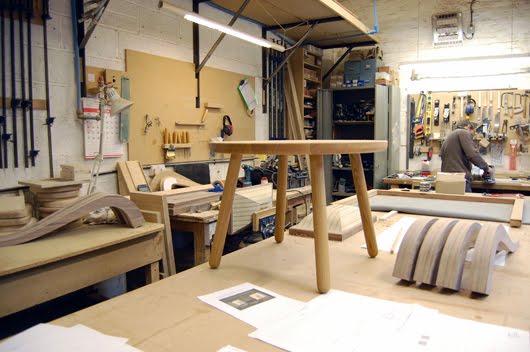
FURNITURE MAKER ANOTHER COUNTRY ON THE TRIALS OF MANUFACTURING IN THE UK

Sight Unseen (a blog that shares a similar fascination with products, processes and the people behind them) has an interview with Another Country founder Paul de Zwart. The main topic of conversation is the restrictions caused by a commitment to solely manufacturing in the UK.

Since launching in 2010, Another Country has developed its product range from just furniture, in to a growing range of accessories. However, the growth of the company has forced it to shift the production of certain items abroad, as de Zwart explains:

“We’re still able make to commissions and one-offs in the Dorset workshop — and the materials are sourced from places like Devon, Scotland and Surrey — but in terms of the production items, they’re made in Portugal. We’ve come to realize that it’s very hard to balance provenance and the romantic notion of keeping things close to home when you actually need to have a reliable, sustainable manufacturer who can deliver the goods on time, at a proper price, and at a consistent quality. It had become almost impossible for me to grow the business short of only selling direct to the consumer.”

-
Photo of Another Country studio from Sight Unseen

Monday, 14 November 2011

FACTORY VISIT NO.7 : VITSOE, CAMDEN


Several weeks ago, I visited Vitsœ in north London (along with David, good friend turned M&I photographer for the day). When I learned about the company making nearly all of its components in the UK I was surprised, presumably because of the Scandinavian sounding name. The story of how it ended up being produced in Britain is an interesting one.

Vitsœ’s key product is the 606 Universal Shelving System, designed by Dieter Rams in 1960 (hence the ‘60’ of ‘606’ - the ‘6’ is the design number).

Shortly after graduating university, Mark Adams became associated with Vitsœ and in 1986 established Vitsœ UK to became the sole importer and distributor of Vitsœ products in the United Kingdom. Under Adams’ leadership, Vitsœ UK quickly became the largest retail account for Vitsœ.

We arrived at the factory, situated off of a Camden side road and were greeted by Anne, an outgoing Scot who would be our host for an excellent day. Also joining us was Keith, who has worked at Vitsœ for nine years and is, as you might expect, thoroughly knowledgeable on every facet of the product.

Starting our tour in the meeting room, which is also an archive containing masses of drawings by Dieter Rams and some of his designs for Braun, we were given an overview of the history of the product. “In the 60s Dieter’s ‘buy less, buy better’ ethos was almost counter culture. Anti-obsolescence rather than sustainability was the message,” Anne told us. It’s fascinating to think of the power of that stance in an era where consumerism was just starting to blossom.

At its north London base Vitsœ assembles the orders, with parts coming from all over the country. A very small amount of the components come from outside the UK, a key one being the drawer runners, from a supplier in Austria. “Else 95% is made in the UK,” says Anne.

There is one supplier that Vitsœ deals with on a regular basis and has high regard for.

“They make lots of the internal components for the 606. The only reason we found them was that Mark was driving one day and he spotted a van that said ‘Quality machine turned components’; he thought that sounded good and got in touch,” Keith tells us as we move onto the factory floor.

It is this constant desire to improve which strikes you as you learn more about the company. Incremental changes appear to be being made on an unbelievably regular basis considering that the product Vitsœ produces is essentially the same as the one created over 50 years ago by Rams. However, as Keith explains the minutiae of these improvements you find yourself understanding how such miniscule changes come to be, and how they reflect the culture of the company.

“The changes we make are often tiny, and sometimes they will cost us more money but it results in a better product,” Keith says, before adding, “These shelves used to be stamped out. When you ran your finger under the bottom of it you could feel it. We spent years trying to get our suppliers to use laser cutting, eventually they did. When we showed Dieter he had the biggest grin on his face.” You get the sense that this means as much to the team working on the product as it does to the designer himself. This quest for perfection does not remain in-house, however.

“We listen to the customers. If they make a suggestion we will take it on board. One very famous one, who I can’t name, suggested we change the shape of the shelving pins. Flat ended, the pins that hold the shelves in place feel flush with the E-track (the upright posts that hold the shelves). He suggested however that the pin could be rounded for ease of use. We made 10,000 of them but then we decided it wasn’t right so we changed it back,” says Keith.

Listening to customer’s feedback doesn’t stop with product improvements – we also hear about customers who have obtained their 606 elsewhere, who then contact Vitsoe UK and have their calls for help answered by being provided with the parts to repair their units. Remarkable.

It comes as little surprise that most of the staff we meet have been with the company for many years. Many of them are RCA graduates, spanning at least four decades by my reckoning. According to Keith, Ian, one of the cabinetmakers, ‘came with the furniture’ when the company moved from Angel to its current location nearly six years ago.

When it came to implementing a new computer system Ian was instrumental in its design. “The way the cabinet makers used to do it was printed assembly lists would come to the workshop and it would be marked with a highlighter,” Keith explained.


“Ian used to have a big folder. A new order would go at the front. There was a piece of card saying ‘in progress’ and when he was building it he’d move it to the next section and when he’d built he’d mark it as complete.”

“When we told him he was getting a computer for the first time in his life there was a look of horror. So we told him ‘no, we’re going to base it around how you work, rather than tell you how to work. You’ll be even more in control’. It’s entirely based on his system: incoming, in progress and completed - all based on his cardboard tabs.”

Every aspect of the production seems to be considered to a level beyond anything I have witnessed previously. As we continue our walk around the factory (Radio 4 favoured by the cabinet makers upstairs, Mount Kimbie by the team downstairs on the day of our visit) we hear about how Vitsœ created bespoke timber boxes to ensure damage free transportation for its parts. “Some companies we work with often find this surprising as there’s not many companies that pay for the packaging to transport parts coming from other factories. But we’ve saved about 15 years worth of cardboard by doing so,” Keith tells us.


We hear how saving packaging is considered across the company - from how the installation teams return all cardboard to the factory after a day’s work to how Bill (one of the more senior members of the team) designed a bespoke tape holder to ensure that the exact amount of tape needed to wrap around a tube was dispensed. Fastidious stuff.


A final tale from Keith sums up why Vitsœ has managed to build such a strong business in the UK. “Around seven years ago we created these cardboard folders for sending out with instructions for fitting. We’d had them for about a week. A German guy who had bought the system from Germany and now lived in Cornwall calls up. He’d removed his shelving from a brick wall and was now putting it up on a plaster wall. He was concerned and called us to ask our advice. We sent him the fixings and instruction manual for free in the new folder. Within a week of him receiving it his wife had placed a new order for more shelving. He made a comment about the quote which reads ‘Our happiest customers are the ones who have dealt with us the longest.’”

-
For the full set of photos, please see the M&I Facebook page

With thanks to Anne and Keith at Vitsœ

Tuesday, 18 October 2011

HALSTOCK CABINET MAKERS : A VIDEO BY CARWELL CASSWELL

I received an email recently from Ross Carwell Casswell who kindly shared a couple of videos on two UK companies - one still very much in business, one now sadly closed. The first is the former; Halstock, a cabinet makers near Yeovil.


Thanks Ross.

Sunday, 21 August 2011

WEEKLY DIGEST

A new manufacturing centre opens soon in Coventry

A short article touching on the history of G-Plan and E Gomme (Made-Good)

The story of the Burberry trench (Isabella Pepper)

Image from Isabella Pepper

Monday, 27 June 2011

YOUNG & NORGATE : A BRIEF Q&A

Devon based Young & Norgate produce beautifully crafted, seemingly simple pieces of furniture. We asked Dave from the company some questions which he kindly answered (with a little help from the team.) Read on to learn about a Danish design duo that inspires them, what keeps the studio working and the importance of sourcing the right materials.

When, how and why did Young & Norgate start?

Whilst grilling sausages over a campfire in North Devon, where Ross and I met studying and we formed the idea to set up in business together. It was early 2010, Ross had notched up seven years in Bench Joinery and I was in the final stages of pulling together the current collection. We both realised that we had complimentary skills to get something off the ground and shared the same vision.

How have you found getting the right craftsmen involved?

Cabinetmaking is not top of most people’s lists when they consider a ‘hands-on’ career. It’s hard work, requires patience but is incredibly rewarding. We have been lucky in that we have attracted a talented team of craftsmen who love what they do. We’re soon to be joined by some young guys under a joinery apprenticeship scheme who we train in finer cabinetry skills. There aren’t so many colleges tailored towards cabinetmaking so we are taking on students who are keen to learn the craft.

We are also very conscious of the environmental impact of sourcing materials in one continent, making it in another continent and then shipping it half way across the world to sell somewhere else. Our products may be more expensive than those mass produced elsewhere but we deliver a more unique and higher quality product. It’s a bit like buying eggs.

Where does the team get its inspiration?

We are big fans of what has come from midcentury Scandinavia and more recently Japan. There is a timeless, beautiful simplicity to the work - although this often makes for challenging manufacturing. Based on the south coast of Devon, we take our inspiration from good clean outdoor living and a lifetime of travel experiences.

Who are your favourite designers/companies?

I am a big fan of Danish duo Finn Juhl and Niels Vodder. Some of Juhl’s designs from the 1940s look like they would sit comfortably adorning any glossy design magazine today and his right hand man Vodder produced an outstanding quality of craftsmanship.

Truck, a Japanese husband and wife team from Osaka, making all their furniture themselves. They craft furniture that is true to materials used with a nice retro twist.

LayerxLayer, a collaborative design studio crafting exceptionally designed products from domestic materials in the USA.

What about beyond the realms of design?

Where to start? If its a case of what makes our days... KCRW online music channel provides a great soundtrack to our days in the workshop. It’s sponsorship supported so there are no ads and very little commentary. Pynes Farm Shop around the back of our workshop, aside from supplying great local produce, have one of the best selection of local biscuits. And Nude Coffee from East London who send us freshly roasted beans to keep us wired.

Why make your items here?

We make our products in the UK because we want to make them ourselves. We love what we do, there’s great satisfaction knowing that a chair we made by hand is going to last generations and be appreciated by many. The UK has heritage in the craft, producing some of the best craftsmen and we want to continue that legacy. In keeping everything in house we can guarantee a high level of quality.

Wellington Chair by Young & Norgate

What consideration do you give materials? Do have any particular favourites to work with?

Obviously we are biased when it comes to timber - particularly FSC certified oak and walnut. We have a fantastic timber yard just down the road where we handpick the boards best suited to our furniture. The timber selection very much depends on the design and required density to achieve certain tolerances on chairs etc. With the Wellington Chair we wanted to push the limits to what timber thickness we could get away with. Maple being a tight grained wood is perfect. We also work with leather and laminates.

Where/what is Young & Norgate's top tip for anyone visiting Devon?

Hire a VW campervan from O’Connor’s Campers and explore the North Coast, stopping at our favourite campsite Little Meadow near Ilfracombe. Also great surfing along the way.

Mountain biking on Dartmoor. An abundance of trails through moorlands.

BBQ on Devon’s only floating cafe - the River Exe Cafe. Just opened, this is a fantastic spot for a sun-downer, bowl of mussels or a BBQ. Can be accessed by boat or water taxi.

Thursday, 26 May 2011

CLERKENWELL DESIGN WEEK : A BRIEF REVIEW OF NEW BRITISH MADE FURNITURE


On Tuesday M&I popped down to the Farmiloe building at Clerkenwell Design Week to have a look at some UK made furniture. Amongst the expected (A.S.A.P: a combination of four likeminded brands - Another Country, Scene, Assemblyroom and Pli) was a new surprise.

House of Hackney specialises in decorative, traditionally twisted home furnishings. A brief chat with Frieda (the brand's founder, alongside her husband) revealed that they have spent a great deal of time sourcing the best British factories with which to work. From the china makers of Stoke on Trent and Scottish furniture makers to the last eiderdown factory in England. They have evidently done their research.

Expect to hear more on all of the above in the near future, but for now, enjoy some images of their work.

Top to bottom, items by: Pli, Assemblyroom, Scene, Another Country, House of Hackney

Monday, 9 May 2011

WEEKLY DIGEST

'The beautiful and important culture of things'. Fascinating article by Stephen Bayley in The Independent on the importance of making. If you read one thing fully this week, make this it.

How Warwick University is training up the 'future industrialists of Britain'. Interesting interview with Kumar Bhattacharyya, founder of Warwick Manufacturing Group (WMG)

Howdens joinery is to invest £20m in its two sites over the next couple of years, one of the largest investments in furniture manufacturing over the last decade.

Friday, 24 December 2010

ERCOL IN THE INDEPENDENT

A nice little piece by Kate Watson-Smyth in The Independent today on the Ercol Butterfly chair. Here's the pick of the quotes:

'Ercolani had perfected the technique of steam-bending wood into curves as well as drying elm with steam so that it wouldn't warp. These methods allowed him to produce both the classic Windsor and curvy Butterfly.'

'Lucian was always fiddling with the designs and the boardroom is full of prototypes that didn't quite work or didn't last very long.' (Edward Tadros, Ercolani's grandson)

Interesting to note that the Butterfly went out of production in the 1980s and it was not until, in 2000, Margaret Howell spurred the resurgence in popularity of the design by stocking it in her shops.

'Thanks to her, sales of the Butterfly went up again and so we put it back into production.' (Tadros)

Image from eBay

Thursday, 18 November 2010

ROBIN DAY

Robin Day, Britain's most famous furniture designer, passed away on 9th November 2010 aged 95.

Born in High Wycombe, a route in to furniture was geographically apt. After art school he worked at a local furniture factory, ensuring a depth of understanding of the manufacturing process that would see his designs sell in their millions around the world.

A wonderful obituary of Mr. Day has been written by Fiona MacCarthy of The Guardian so I shall not attempt to better that here. Instead, I will take a quote from Charlotte Higgins' blog to finish on:

'Remember him next time you sit in the Royal Festival Hall, the Barbican Theatre, on the platform at a Tube station, or on a Polypropylene stacking chair (the standard seat of my, and so many other people's, schooldays). His work, as he would have wanted, goes on.'

Friday, 5 November 2010

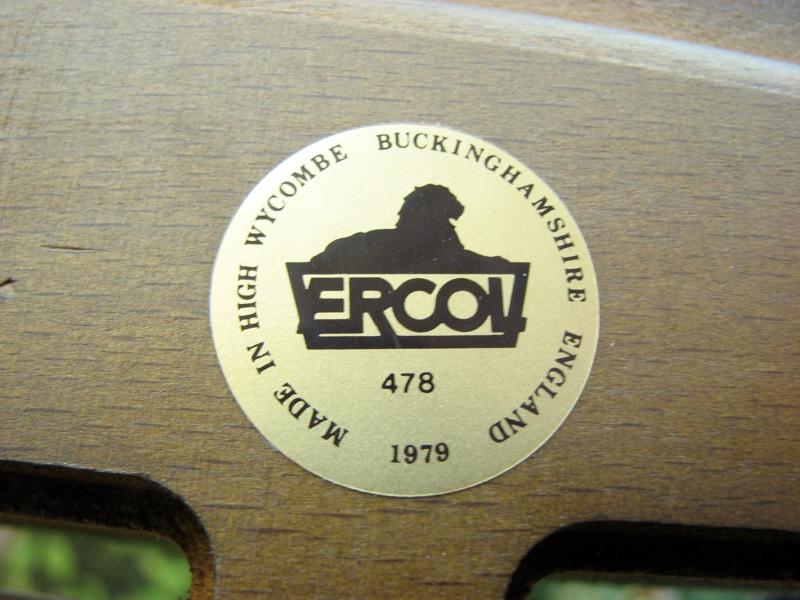
INSIDE THE ERCOL FACTORY

Last night I spent some of my evening putting together an Ercol table that we bought from a lady in Liverpool. The construction of the base is truly beautiful, it was slightly sad to think I won't be seeing it again until we (inevitably) move house once more.

In an instance of fortuitous timing, Ercol have today published some pictures of DEFRA minister Lord Henley visiting its factory in Princes Risborough.

We would love to see more of the steam bending process that is intrinsic to the creation of the Windsor Quaker chair.

Picture from Ercol

Wednesday, 29 September 2010

ERCOL - MARGARET HOWELL REISSUES


'It is the combination of quality and craftsmanship and a straightforward, yet elegant approach to the design that attracts me to this particular period of Ercol furniture and has led me to re-evaluate Ercolani's original designs' (Margaret Howell, 2004)

Tuesday, 21 September 2010

OLIVER SPENCER & ANOTHER COUNTRY

Another Country? No, still very much to do with products made in the UK, fear not. M&I attended a tastefully modest event at Oliver Spencer's shop on Lambs Conduit St, London last night. On display was a fine array of understated furniture from Dorset based Another Country. We couldn't hang around for long but enjoyed what we saw and appreciated the hospitable nature of the hosts.

Thanks to Oliver Spencer (lovely shop with some excellent clothing on a very pleasant road in WC1N) and Another Country for the invite.

The image above is from the excellent Another Country gallery. We took some pictures that are not quite as good and they can be found here.

Wednesday, 21 April 2010

'WHERE THINGS COME FROM AND HOW THEY'RE MADE'

The Milan Furniture Fair is over. According to Sight Unseen the documentation of the manufacturing process was evident throughout the show, something M&I was pleased to hear:

'The only trend worth writing home about was the diaristic glimpse into process that so many designers chose to offer this year, supplementing their finished products with sketches, models, and real-time demonstrations. Droog, Tom Dixon, and the Belgian gallery Z33 turned manufacturing into a spectator sport, churning out saleable objects on the spot, while the young Berlin duo Studio Hausen decided to forgo actual products entirely, outfitting their Satellite booth with a vitrine full of experimental bits and bobs from recent research projects. Certainly in some cases the conceit helped mask a lack of new production pieces, an economic consequence that plagued the fair in general, but mostly it celebrated curiosity, storytelling, and a growing interest in where things come from and how they’re made.'

(Photo from Sight Unseen)

Tuesday, 22 December 2009

ERCOL, THEY HAVE A BLOG

We are glad to see Ercol putting some effort in to its public relations through its blog. Other manufacturers looking to do the same should take note of Ercol's mix of new product features alongside more in-depth, historically noteworthy items.

Above, the company's founder, Lucian R Ercolani OBE and his son, Lucian B Ercolani, DSO DFC are shown giving an interview to the BBC on 25th April 1966, demonstrating the bending of Windsor chair backs - the same equipment is still in use today.

Wednesday, 16 December 2009

ESTABLISHED AND SONS, NICE SITE


Thanks to It's Nice That for bringing the new Established & Sons site to our attention.

The products featured above are the De La Warr Pavilion chair by BarberOsgerby and the M5 table by Frank.

*File under, 'Unaffordable Beauty'

Monday, 30 November 2009

SCRAPBOOK PT. 4

Peter Marlow's office in Narrow Street, Limehouse. London. 1982
Pellicci's cafe, Bethnal Green Road. London
Marx's shield design - used in 1949 on the Bakerloo, Northern and District Lines

Thursday, 19 November 2009

PINCH DESIGN STUDIO

YVES DESK
JOYCE CABINET
IMO STOOL
CLEMENT COFFEE TABLE